
You should consult a pulmonologist for asthma if your symptoms are severe, frequent, or unresponsive to standard primary care treatments. These specialists provide expert diagnosis and advanced management plans for complex lung conditions to help prevent sudden attacks and improve long-term respiratory health.
Living with asthma often feels like a constant negotiation with your own lungs, especially when a rescue inhaler becomes a daily necessity rather than an occasional backup. While primary care providers manage mild cases effectively, persistent wheezing and chest tightness suggest that your chronic respiratory inflammation requires a more nuanced approach. At Pulmonary CC, LLC, we understand that sub-optimal asthma control limits your quality of life and increases the risk of long term airway remodeling. This guide clarifies when to transition from general care to specialized pulmonary intervention. We will examine the specific red flags that indicate poorly controlled symptoms, distinguish between the roles of pulmonologists and allergists, and explore how diagnostic testing identifies conditions often misdiagnosed as asthma. You will also learn about localized triggers in Boynton Beach and how modern virtual care ensures your breathing remains a priority.
Understanding the Role of a Pulmonologist for Asthma Care
A pulmonologist is a physician who completes years of advanced training to master the diagnosis and treatment of conditions affecting the respiratory system, specifically the lungs and bronchial tubes. While a primary care physician (PCP) is often the first point of contact for a mild cough or seasonal wheezing, the role of a specialist involves a more granular focus on the complex mechanics of breathing. Asthma is not simply a collection of symptoms; it is a chronic inflammatory disease that, if managed incorrectly, can lead to permanent airway remodeling.
Choosing a pulmonologist for asthma means your care is guided by a specialist who analyzes how air moves through your airways and how effectively your body exchanges oxygen. This perspective is vital because the respiratory system is interconnected. A specialist looks beyond the immediate wheeze to ensure the bronchial health is not being compromised by other physiological factors. At Pulmonary CC, LLC in Boynton Beach, Dr. Wambura Mkono provides expert pulmonary care by examining the entire respiratory architecture. This specialized approach ensures that symptoms attributed to asthma are not masking underlying issues such as restrictive lung disorders or early-stage obstructive diseases.
Through his work at the clinic and Bethesda Hospital East and West, Dr. Mkono integrates advanced clinical diagnostics with a deep understanding of lung physiology. For those needing immediate guidance on symptom management, non-emergency virtual care offers a bridge to expert advice between office visits. If you are struggling to maintain a clear airway, it may be time to contact Pulmonary CC, LLC for a comprehensive evaluation.
Five Red Flags Your Asthma Is Not Well Controlled
Recognizing when a management plan is failing requires looking beyond the occasional wheeze. A key framework used to assess the severity of airway inflammation is the Rule of Twos. If you meet any of the following criteria, your condition has likely moved beyond the scope of general management and necessitates a pulmonologist for asthma consultation:
Using a rescue inhaler, such as Albuterol, more than twice a week for symptom relief.
Waking up during the night due to coughing or shortness of breath more than twice a month.
Experiencing more than two asthma flares per year that require oral corticosteroids.
Beyond these clinical markers, several yellow flags suggest sub-optimal control. Persistent chest tightness during moderate exercise or a lingering cough that disrupts daily conversation are often dismissed by patients who have lived with respiratory issues for years. However, these symptoms indicate that the bronchial tubes remain chronically inflamed, even if a full scale attack has not occurred recently. The goal of expert pulmonary care is total control, a state where a patient experiences no activity limitations, no nocturnal symptoms, and minimal need for rescue medication.
If you find yourself modifying your lifestyle to avoid minor physical exertion or carrying a rescue inhaler as a constant crutch, your asthma is not adequately managed. Dr. Mkono utilizes objective data to identify these red flags before they lead to emergency room visits at Bethesda Hospital East or West. For patients experiencing a sudden uptick in symptoms or those who have questions about their current frequency of inhaler use, non-emergency virtual care provides a pathway to adjust treatment plans quickly. Monitoring these clinical indicators is essential for preventing permanent airway remodeling. If these signs feel familiar, it is time to contact Pulmonary CC, LLC for a specialized assessment.
Pulmonologist vs. Allergist: Which Specialist Do You Need
Patients frequently ask whether they should see an allergist or pulmonologist for asthma management. While both specialties treat the condition, they approach the respiratory system from different angles. An allergist focuses on the immune system's hypersensitivity, identifying external triggers such as pollen, pet dander, or dust mites that provoke an inflammatory response. Their goal is often to mitigate the body's overreaction to these environmental factors.
In contrast, a pulmonologist focuses on the internal mechanics of the lungs and the physical state of the bronchial tubes. Dr. Mkono evaluates how the disease has physically altered the airways and monitors for permanent structural changes.
Feature | Allergist Focus | Pulmonologist Focus |
|---|---|---|
Primary Goal | Identify and mitigate external triggers | Optimize lung function and airway health |
Diagnostic Tools | Skin prick tests, IgE blood work | Spirometry, PFTs, advanced imaging |
Core Expertise | Immune system hypersensitivity | Respiratory mechanics and pathology |
Priority should be given to a pulmonologist if symptoms persist despite avoiding known triggers, or if you experience significant shortness of breath that limits daily activity. Furthermore, a lung specialist is essential when the diagnosis itself is uncertain. Conditions that mimic asthma, such as vocal cord dysfunction or restrictive lung disease, require the sophisticated diagnostic tools found in expert pulmonary care.
Many patients benefit from a collaborative approach where both specialists work in tandem. While an allergist manages the triggers, Dr. Mkono ensures the lungs are functioning at peak capacity. For those who need immediate guidance on symptom progression or lung function changes, non-emergency virtual care provides a convenient platform for expert consultation. To determine the best path for your respiratory health, you can contact Pulmonary CC, LLC for a detailed assessment.
What Else Could It Be? Conditions Mistaken for Asthma

Accurate diagnosis is the cornerstone of effective treatment. While wheezing is the hallmark of asthma, it is a non-specific symptom that occurs in several other complex conditions. A pulmonologist for asthma utilizes a process called differential diagnosis to distinguish true bronchial inflammation from other pathologies that mimic its presentation. This level of scrutiny is critical because treating a separate condition with asthma medications will not provide lasting relief and may delay necessary intervention for more serious underlying issues.
Several conditions frequently masquerade as asthma, requiring specialist tools to differentiate:
Condition | Why it Mimics Asthma | Key Difference |
|---|---|---|
Vocal Cord Dysfunction (VCD) | Causes wheezing and throat tightness during inhalation. | The blockage is in the upper airway, not the bronchial tubes. |
COPD | Involves chronic cough and shortness of breath. | Typically involves permanent damage to the air sacs rather than reversible inflammation. |
Cardiac Asthma | Heart failure causing fluid buildup in the lungs. | Symptoms are driven by the cardiovascular system, not primary lung disease. |
GERD | Acid reflux irritating the airways. | Triggers a chronic cough that is often worse when lying down at night. |
Dr. Mkono’s specialized training allows him to look for subtle clinical cues that a general clinic might overlook. Through expert pulmonary care, patients receive a thorough workup that moves beyond a simple physical exam. If symptoms are atypical or unresponsive to standard inhalers, non-emergency virtual care can serve as an initial touchpoint to discuss whether further diagnostic testing is required. To ensure your diagnosis is accurate, contact Pulmonary CC, LLC for a comprehensive review of your respiratory history.
What to Expect During Your First Visit with Dr. Mkono
A consultation with a pulmonologist for asthma involves more than a physical exam; it is a data-driven investigation into your respiratory capacity. During your initial visit, Dr. Mkono establishes a baseline using spirometry, which measures the volume and speed of air you can exhale. If your symptoms are complex, he may utilize full Pulmonary Function Tests (PFTs) to assess lung volumes and diffusion capacity, which determines how efficiently your lungs transfer oxygen into your bloodstream.
Diagnostic Tool | Clinical Purpose |
|---|---|
Spirometry | Measures airflow obstruction and airway reversibility. |
Lung Volumes | Identifies if the lungs are restricted or over-inflated. |
Diffusion Capacity | Evaluates oxygen exchange efficiency at the alveolar level. |
Peak Flow | Provides a daily snapshot of airway narrowing for home monitoring. |
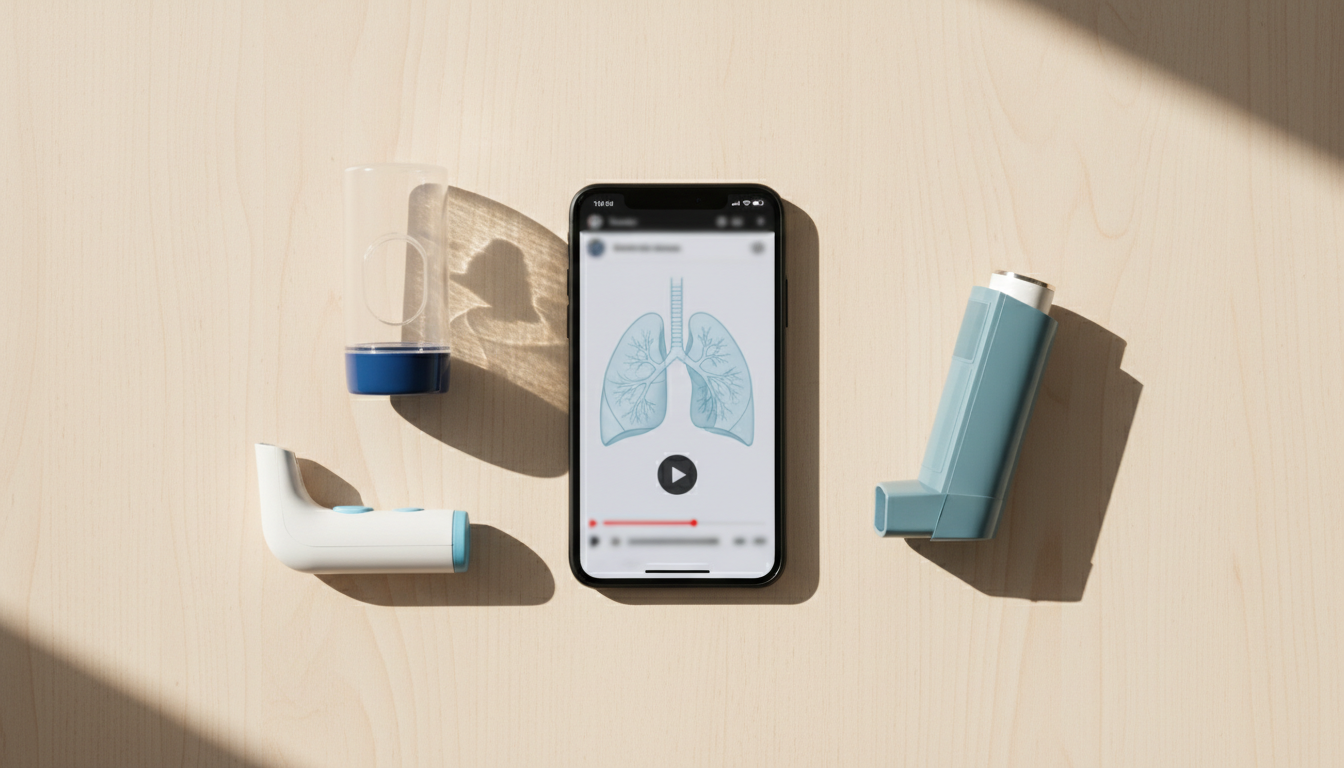
Beyond technical testing, the most important part of any asthma visit is often the simplest: watching how you use your inhaler. I tell my patients that inhaler technique + schedule + consistency = an inhaler that actually works. Without all three, the medication never reaches the airways the way it should.
Here is something that surprises people: many patients who are prescribed daily inhalers are not actually using them, or not using them correctly, and no one has checked. When I take the time to teach, watch, and confirm your technique, we often find that simply fixing how you take your medication prevents unnecessary escalations, urgent care visits, hospitalizations, and the fear that comes with feeling like you cannot catch your breath. Good control does not just feel better. It saves you more, in every way that matters.
If you want to go deeper, I have built a library of free educational videos on my YouTube channel, Dr. Mkono MD, where I walk you through the exact inhaler techniques and lung health strategies I teach my own patients in clinic. You will find step-by-step spacer demonstrations, COPD home-management tips, and real-world asthma guidance drawn from two decades of pulmonary practice. It is the same conversation we would have in the exam room, available whenever you need a refresher. For patients who need a quick review of their current management plan, non-emergency virtual care offers immediate specialist access. To begin this diagnostic process, you can contact Pulmonary CC, LLC for a comprehensive appointment.
A Quick Note on Spacers
If you use a metered-dose inhaler, a spacer is one of the simplest tools to improve how much medication reaches your lungs. It holds the medicine in a chamber so you can breathe it in slowly, instead of it hitting the back of your throat.
I recommend spacers to nearly every patient on an MDI, and I have personally reviewed options available on Amazon. You can browse my recommended spacers and other respiratory tools on my Amazon storefront. A few well-reviewed choices I suggest for adults:
[Nessi OTC Spacer with Silicone Mask](https://www.amazon.com/Inhaler-Spacer-Adults-Nessi-Silicone/dp/B0GHNQV91G) ($29.99, 4.4 stars) — includes a travel case and fits most standard MDIs.
[Fivepropy Aerochamber with 2 Masks](https://www.amazon.com/dp/B0BKZLJTYZ) ($16.99, 4.3 stars from 362 reviews) — durable, reusable, and comes with both adult and child masks.
[Yuioce Inhaler Spacer with Silicone Mask](https://www.amazon.com/Inhaler-Spacer-Adults-Eligible-Silicone/dp/B0DYYW1WR4) ($16.90, 4.4 stars from 146 reviews) — lightweight, travel-friendly, and FSA/HSA eligible.
Always clean your spacer according to the package instructions, and bring it to your appointment so we can check your technique together.
Managing Asthma in Boynton Beach: Local Triggers and Humidity
Living in Boynton Beach presents unique challenges for respiratory health that differ significantly from drier climates. South Florida's persistent high humidity acts as a catalyst for asthma triggers, often trapping particulates close to the ground and encouraging the rapid growth of mold and dust mites. For many patients, the seasonal release of specific palm pollens or the increased mold counts following summer rainstorms can lead to sudden flare-ups that standard protocols might not address.
A pulmonologist for asthma who understands these regional nuances provides a distinct advantage in management. Dr. Mkono’s experience within the local community and at Bethesda Hospital East and West ensures that treatment plans account for the heavy, moisture-laden air typical of the region. This localized knowledge is essential for distinguishing between a temporary seasonal reaction and a long-term decline in lung function. Through expert pulmonary care, patients receive guidance on navigating these specific environmental stressors. When high pollen counts or extreme humidity cause acute discomfort, non-emergency virtual care offers a way to adjust your management plan without delay. For a strategy tailored to the South Florida environment, contact Pulmonary CC, LLC to schedule a consultation.
On Demand Support: The Benefits of Virtual Care for Asthma

Managing asthma in South Florida requires agility, as environmental conditions can shift faster than a scheduled office visit allows. For patients experiencing a sudden increase in symptoms or those needing immediate medication adjustments, non-emergency virtual care through UCan Virtual Health Inc provides a critical bridge. This 24/7 service allows you to consult with a pulmonologist for asthma about non-life-threatening changes, such as increased nocturnal coughing or a slight decline in peak flow readings, without the delays often associated with insurance processing or standard scheduling.
This cash-pay platform is specifically designed for individuals with commercial or non-government insurance who prefer the directness of on-demand consultations. It empowers patients to bypass traditional insurance hurdles and receive specialized guidance exactly when symptoms escalate. While Dr. Mkono continues to provide expert pulmonary care at the Boynton Beach clinic and Bethesda Hospital East and West, this virtual option ensures that your management plan remains responsive. By addressing respiratory concerns before they become emergencies, you maintain better long-term control. To integrate this level of access into your treatment plan, contact Pulmonary CC, LLC to learn more about our virtual health integration.
Managing asthma effectively means recognizing when standard treatments are no longer sufficient. If you experience frequent flare-ups, rely heavily on a rescue inhaler, or feel your symptoms are limiting your daily life, it is time to seek specialized guidance. Taking control of your respiratory health is a collaborative process. If you want expert help navigating your treatment options, you can learn more about our Services. Pulmonary CC, LLC is here to provide the focused care you need to breathe easier.